Stop Buying Citation Packages That Never Show Up in Google Maps (2026 Guide)
It’s the classic “Fiverr Trap.” You’re a business owner – perhaps a plumber in Chicago or a personal injury lawyer in Miami – and you’re frustrated that your competitors are hogging the top spots in the Google Map Pack. You go online, search for a quick fix, and find a package promising “500 High-Authority Local Citations” for the low price of $50. It sounds like a steal. You pay the money, wait two weeks, and receive a spreadsheet filled with links to directories you’ve never heard of.
Then, you wait. A month goes by. Two months. Your ranking hasn’t budged. In fact, you might have even dropped a spot or two. This is the reality of the 2026 local search landscape. The era of quantity-based SEO is dead. As modern strategists often say, “Local SEO isn’t marketing. It’s infrastructure.” If your infrastructure is built on “zombie” directories and unindexed spam, your google business profile seo will never provide the ROI you expect. This guide is designed to expose why these cheap packages fail and provide a technical roadmap for genuine Google Maps dominance.
The “Citation Ghosting” Problem: Why Your $50 Package Failed
The primary reason cheap citation packages fail is a phenomenon we call “Citation Ghosting.” In the early days of Local SEO, simply having your Name, Address, and Phone number (NAP) mentioned on a website was enough to signal relevance to Google. Today, Google’s algorithm is significantly more discerning. If a search engine’s crawler doesn’t index a page, that page – and the citation on it – effectively does not exist.
Most low-cost providers use automated software to blast your business information onto hundreds of low-quality, “zombie” directories. These are websites that haven’t been updated in years, have zero organic traffic, and are ignored by Google’s indexing bots. Recent insights from the SEO community on platforms like Reddit confirm that “Google map pointing services” and massive citation blasts rarely result in indexed links. When Google sees a sudden influx of 500 citations from non-indexed, irrelevant sites, it doesn’t see a popular business; it sees a spam attempt.
Furthermore, these packages often ignore the technical health of the directories. If the site is slow, lacks a mobile-responsive design, or is flagged for malware, a link from it can actually harm your reputation in the eyes of the algorithm. This is why your Google Maps ranking refuses to move after buying a package. You aren’t building authority; you’re adding digital noise that Google has been trained to filter out.
Quality Over Quantity: The 2026 Citation Hierarchy
In 2026, the volume of citations is a vanity metric. What matters is the authority and relevance of the sources. To rank higher on google maps, you must understand the hierarchy of local signals. Not all citations are created equal.
Structured Citations: The Foundation
Structured citations are the “Big Rocks.” These are the primary data aggregators and major directories like Yelp, Yellow Pages, Apple Maps, and Bing Places. These sites are crawled daily by Google. If your NAP data is inconsistent across these platforms, it creates a “trust gap.” Before you even think about a google maps ranking service, you must ensure your core structured citations are 100% accurate and verified.
Unstructured Citations: The Authority Builders
This is where the real ranking power lies in 2026. An unstructured citation is a mention of your business on a non-directory site, such as a local news outlet, a neighborhood blog, or a community event page. These are harder to get, which is exactly why Google values them so highly. A single mention in a local digital newspaper is worth more than 1,000 citations on “FreeBusinessDirectoryXYZ.com.”
Research into current ranking factors shows that 100% profile completion – including high-resolution photos, detailed service descriptions, and an active Q&A section – combined with a 4.4+ star rating is the baseline for entry into the top 3-pack. If you are missing these elements, no amount of citation building will save your google business profile optimization strategy.
The Invisible Signals: Beyond Name, Address, and Phone (NAP)
While citations tell Google who and where you are, behavioral signals tell Google how much people care about you. In 2026, Google has shifted heavily toward “behavioral engagement” as a primary ranking factor. This is the secret sauce that separates the top 1% from the rest.
- Click-Through Rate (CTR): How many people click your listing when it appears in search results?
- Call Volume: Are people actually using the “Call” button on your profile?
- “Near Me” Intent: How often do users search for your specific services while physically located near your business?
- Direction Requests: Do people ask for driving directions to your office?
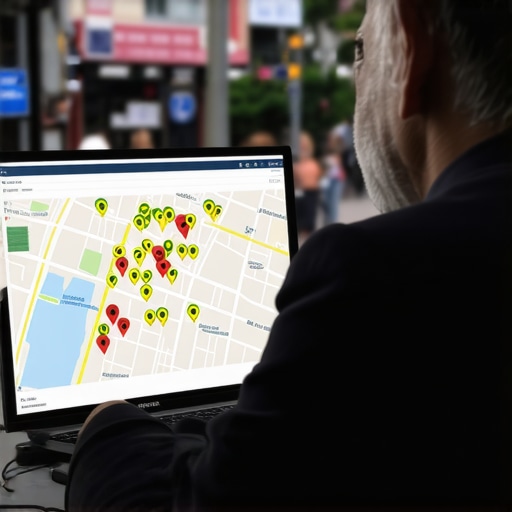
To track and influence these metrics, professionals use advanced local seo tools that provide heatmaps of where your business is ranking and how users are interacting with your profile. If you want to rank google business profile listings effectively, you need to look at these invisible signals. For instance, if your listing is appearing but no one is clicking, Google will eventually swap you out for a competitor with a more engaging profile. This is why you must ditch citation spam: 3 maps ranking optimization fixes for 2026 that focus on user experience rather than just bot-feeding.
Google is now “extremely aggressive” about enforcing business name accuracy. Keyword stuffing your business name (e.g., “Mike’s Plumbing – Best Plumber Chicago”) might have worked in 2020, but in 2026, it’s a fast track to a profile suspension. Accuracy and prominence are the keys to long-term stability.
How to Audit Your Current Messy Listings
Before you spend another dollar on a gmb ranking service, you need to clean up the mess left behind by previous “budget” SEO attempts. A “No-Nonsense Audit” is the first step in any successful recovery plan.
- Identify Duplicate GBPs: Multiple listings for the same business at the same location confuse Google and dilute your ranking power. These must be merged or deleted.
- Fix Inconsistent Phone Numbers: Are you using a tracking number on one site and your landline on another? This “NAP drift” kills trust. Stick to one primary number for all public-facing citations.
- Clean Up “Citation Drift”: If your business moved three years ago, chances are your old address is still floating around on 50+ websites. Google sees this and wonders if you’re still in business.
- Verify Your Categories: Ensure your primary category on your Google Business Profile matches the service you most want to rank for. This is a critical component of local seo software analysis.
Performing the precise audit steps to fix messy business listings that kill your map rank is tedious, but it is the “infrastructure” work that allows your marketing to actually function. Without a clean foundation, your google maps seo efforts are like trying to build a skyscraper on a swamp.
The Reddit Goldmine: A New Era of Local Engagement
One of the most significant shifts in the search landscape over the last 24 months is how Google treats community-driven platforms. Reddit threads now frequently outrank traditional blogs and directories for local queries. Why? Because Google trusts the “human” element of Reddit more than the “SEO” element of a curated directory.
For a local business, this presents a massive opportunity for “hyperlocal” authority. When local residents discuss “the best orthodontist in town” on a city-specific subreddit, and your business is mentioned naturally, Google views this as a high-authority unstructured citation. This isn’t about spamming Reddit with ads; it’s about genuine community engagement. This type of brand trust acts as a powerful signal that influences the “Prominence” pillar of the “Proximity, Relevance, and Prominence” trio that governs the Map Pack.
5 Questions to Ask an SEO Agency Before Buying a “Package”
If you are considering hiring a google maps ranking service, do not be swayed by flashy charts or promises of “Top 3 in 30 days.” Use this checklist to vet them before they waste your marketing budget:
- “How do you ensure the citations you build are actually indexed by Google?” If they don’t have a strategy for indexing (like using tiered links or social signals), the citations are worthless.
- “Do you provide a manual audit of my existing NAP data before building new links?” If they just start blasting new links without fixing the old ones, they are making the problem worse.
- “How do you handle duplicate suppression?” A real pro will actively seek out and remove duplicate listings.
- “What is your strategy for generating unstructured citations?” If they only talk about directories, they are stuck in 2015.
- “Which gmb seo tools do you use to track behavioral signals like CTR and direction requests?” They should be looking at more than just keyword rankings.
Knowing how to vet SEO cost experts before they waste your marketing budget will save you thousands of dollars and months of lost revenue. Real local seo agency work is transparent, technical, and focused on long-term growth.
Conclusion: Building a Commanding Presence
The “quick fix” for Google Maps ranking is a myth. In 2026, the businesses that dominate the map pack are those that treat their digital presence as vital infrastructure. They don’t buy 500-citation packages; they invest in quality, accuracy, and engagement. They use high-end google maps lead generation tools to understand their market and refine their approach based on real user data.
Stop looking for the cheapest option and start looking for the most effective one. Audit your listings, engage with your local community, and focus on providing a stellar customer experience that naturally generates the reviews and signals Google craves. The map pack is the most valuable real estate on the internet – make sure your business is built to stay there.
Author: Michael Pilko – Local SEO With Focus on Google Business Profile …
Why most monthly map ranking packages are full of fluff you don’t need